2013-2018
The Alberni Valley, named after a Spanish explorer, is on Vancouver Island, named after a British explorer with a Dutch name. It sits in the traditional territory of the Nuu-Chah-Nulth people. We have petroglyphs and an archeological dig. This is an interesting place with more history than most realize. Nevertheless, it is the geography that dominates. We have mountains, so when the prevailing westerly winds bring moisture from the Pacific Ocean, there is beaucoup rain. Trees like that. Hence we are in the temperate rain forest with lots of tall fir, hemlock and cedar. The valley is at the end of a long, narrow inlet. Most people live in Port Alberni, a town of about 20,000. The largest building is the paper mill.
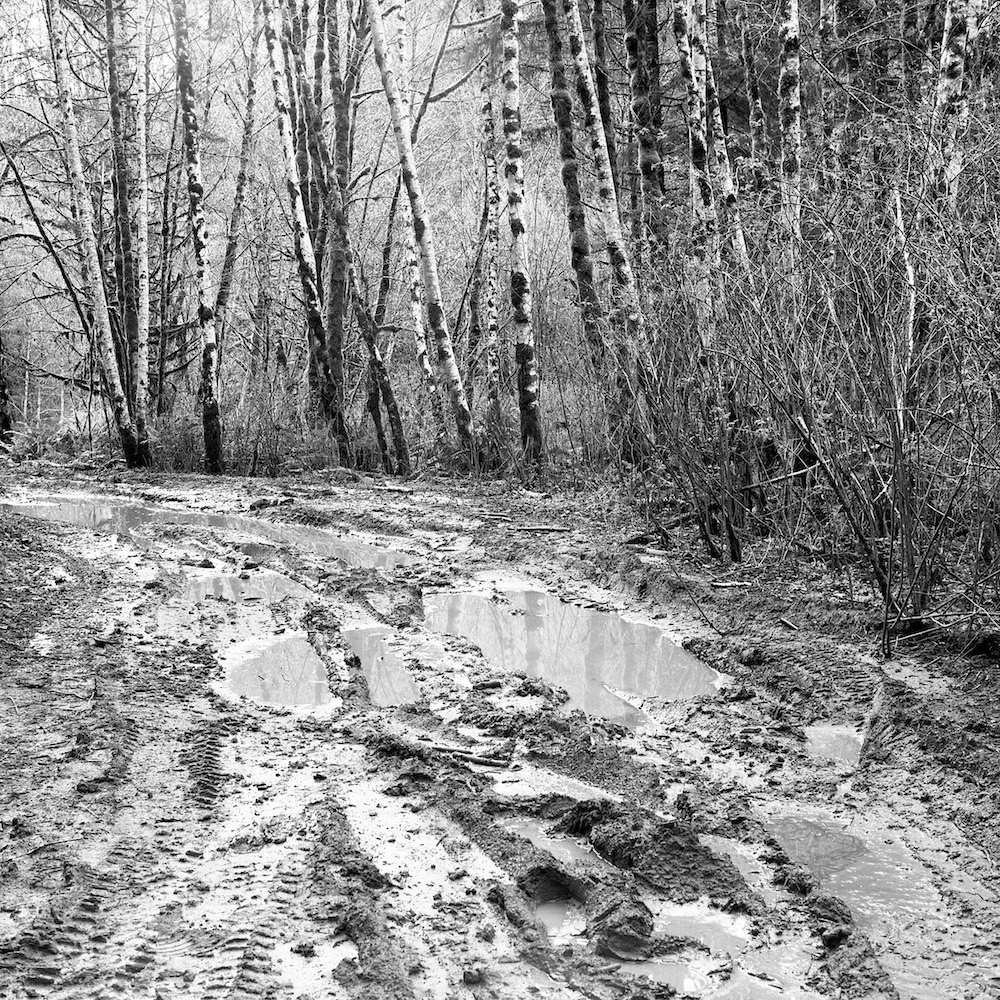
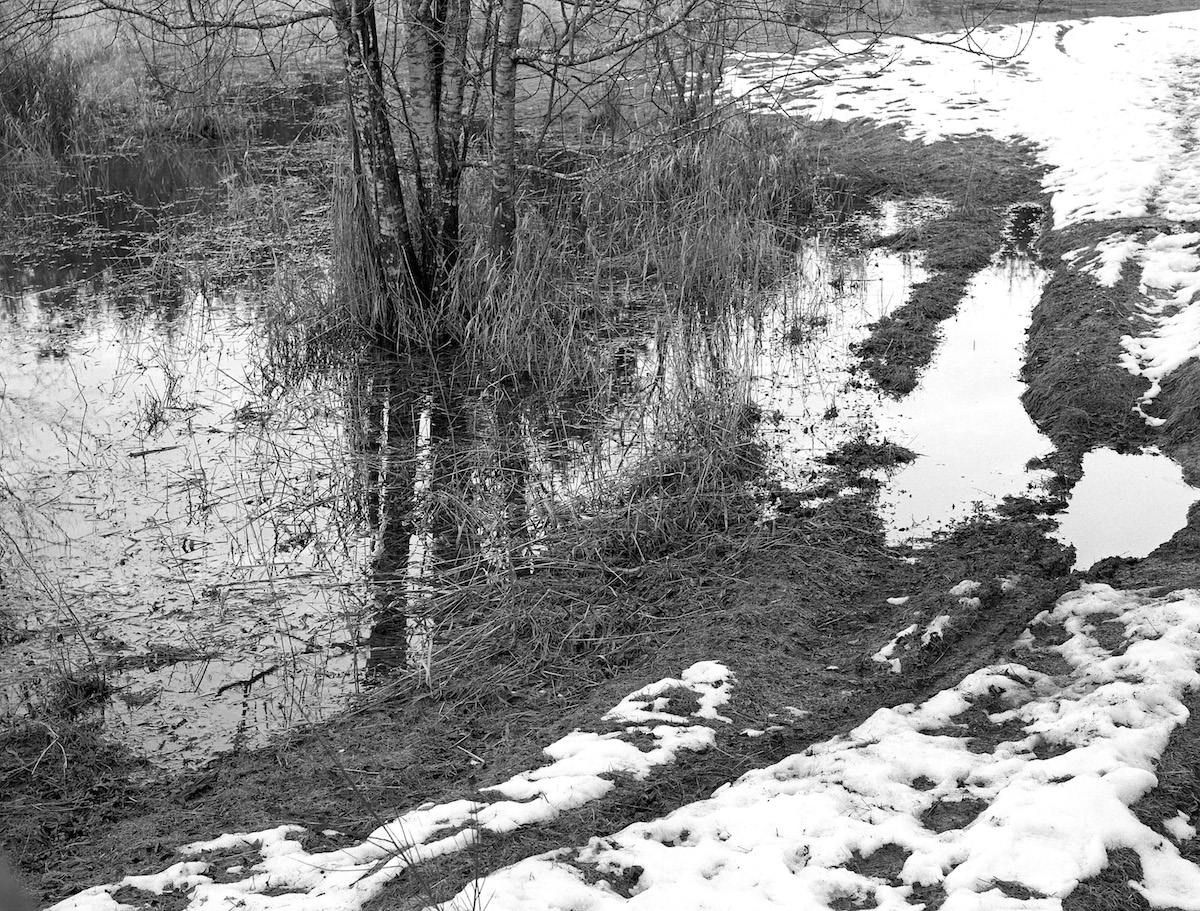
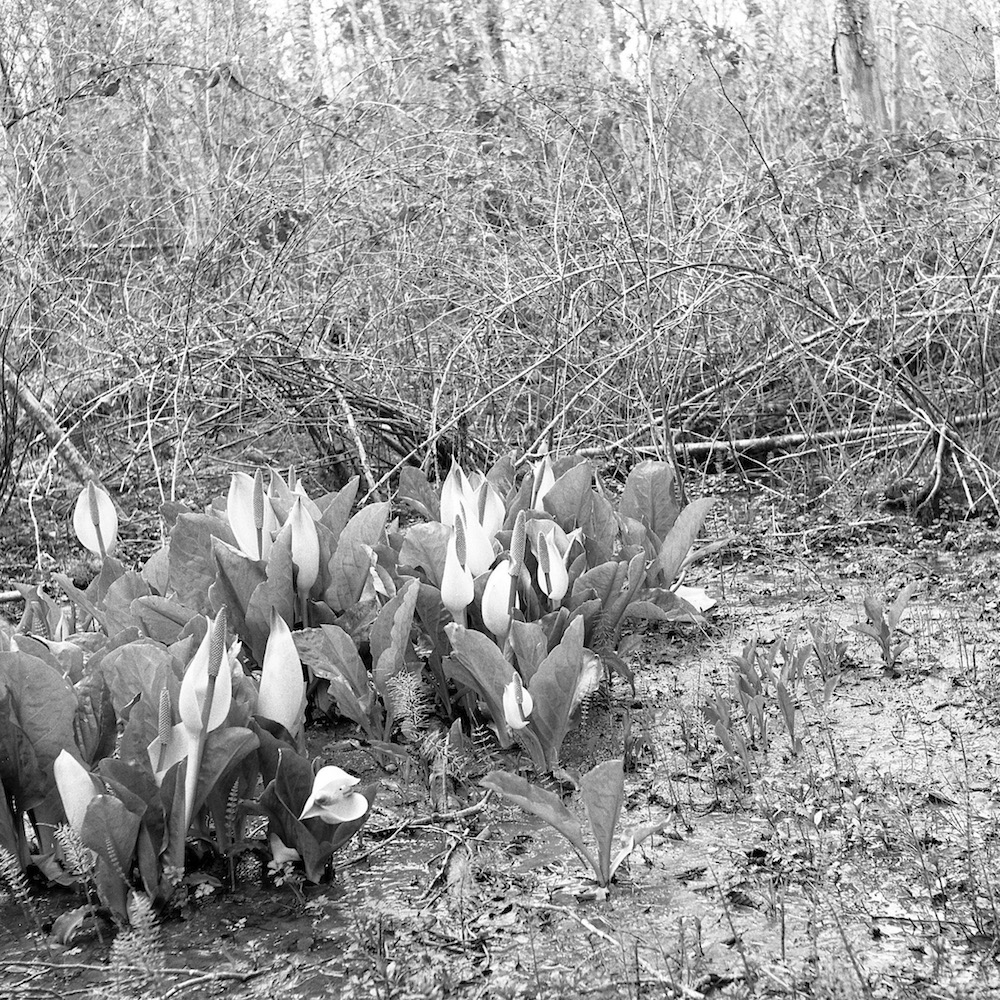
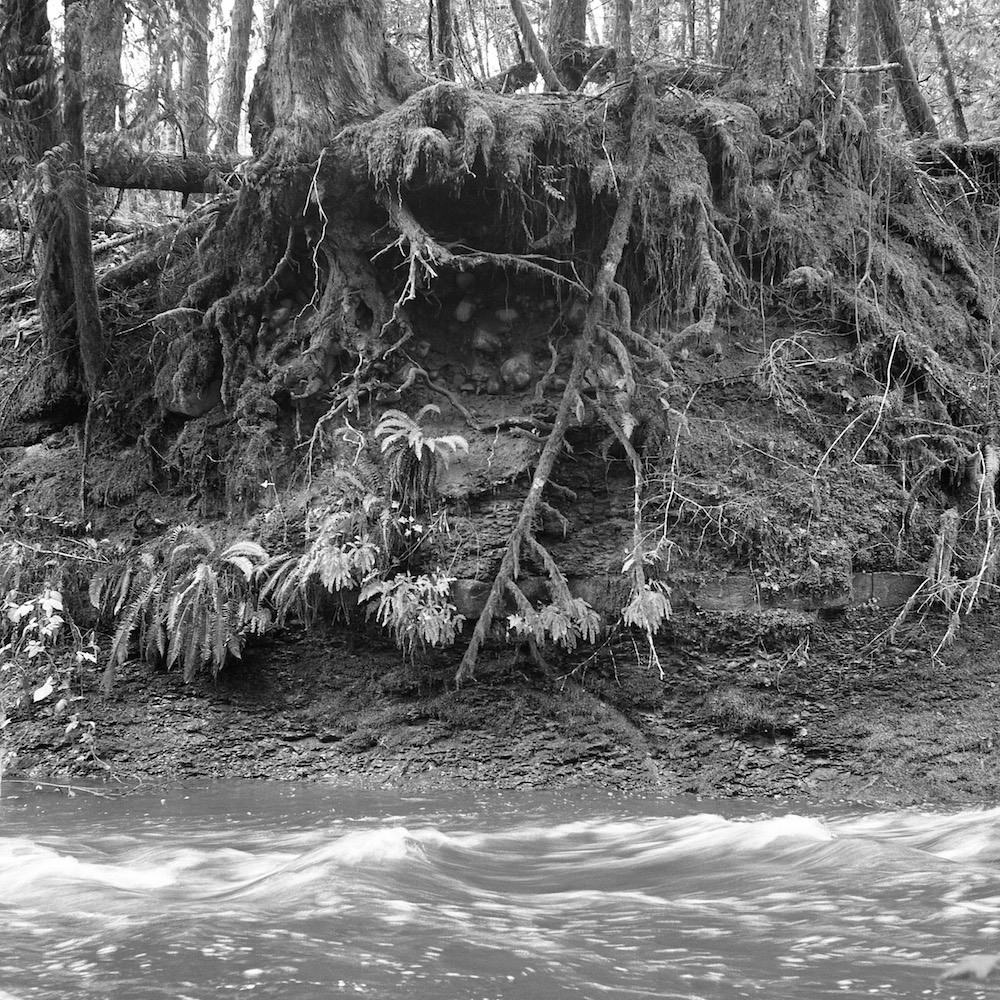
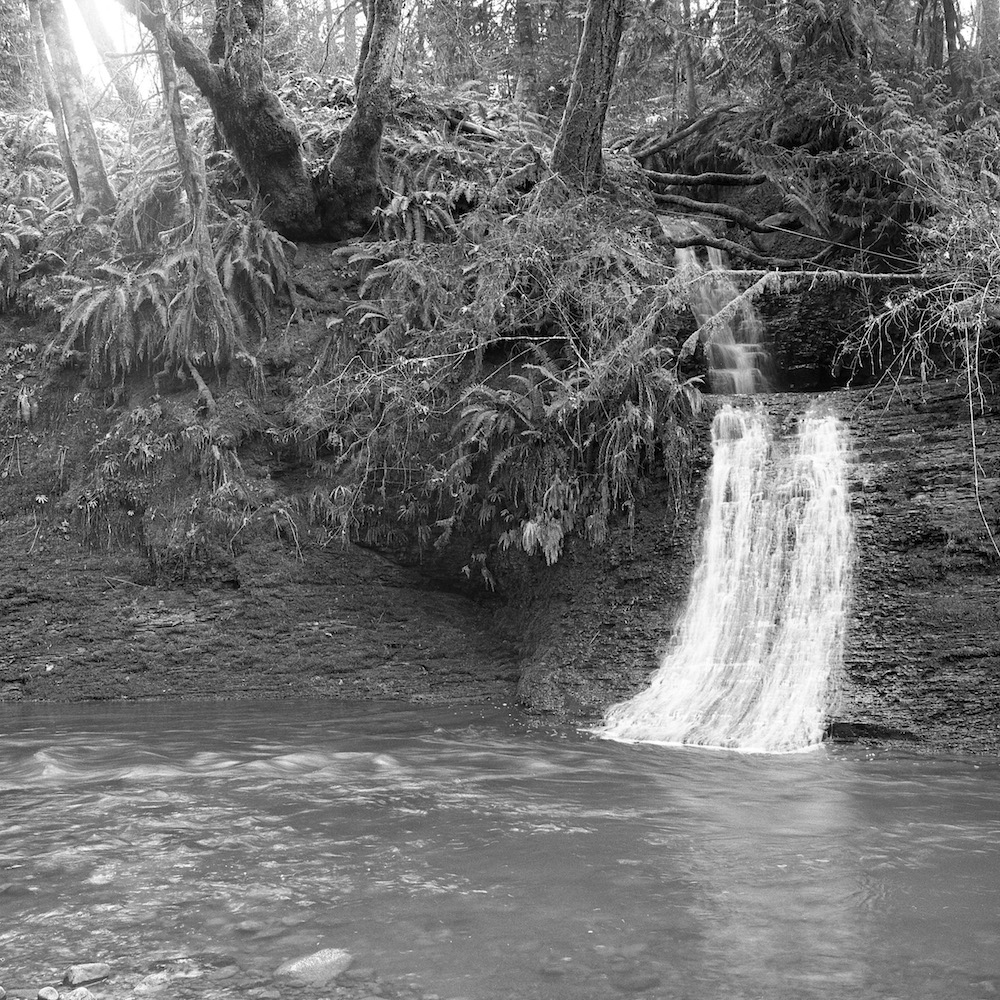
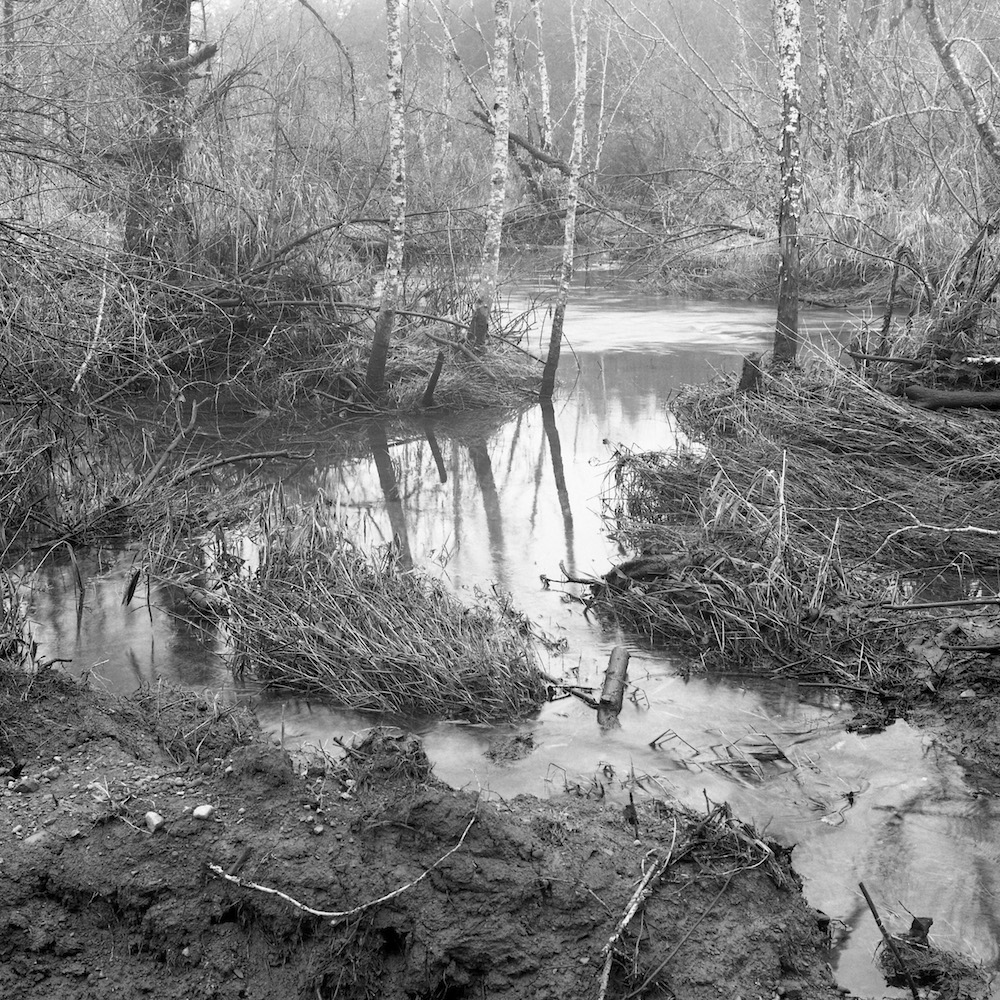
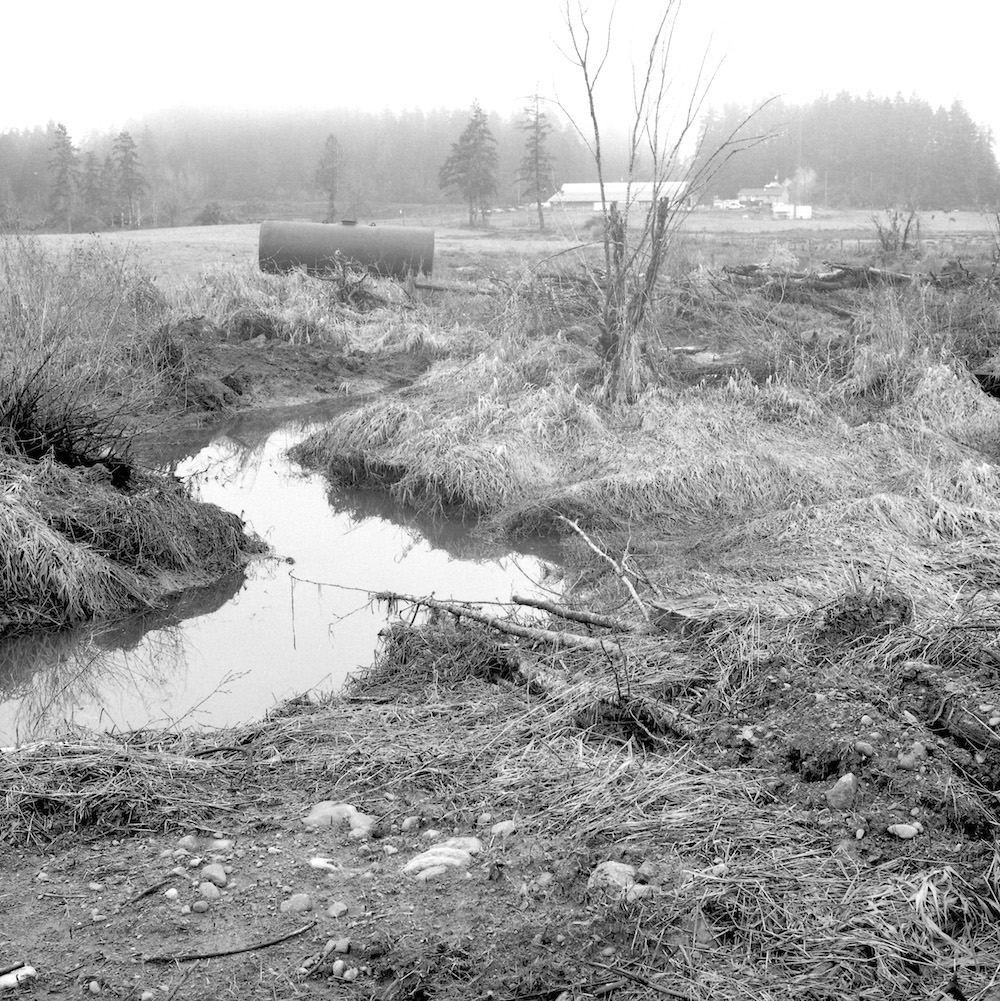
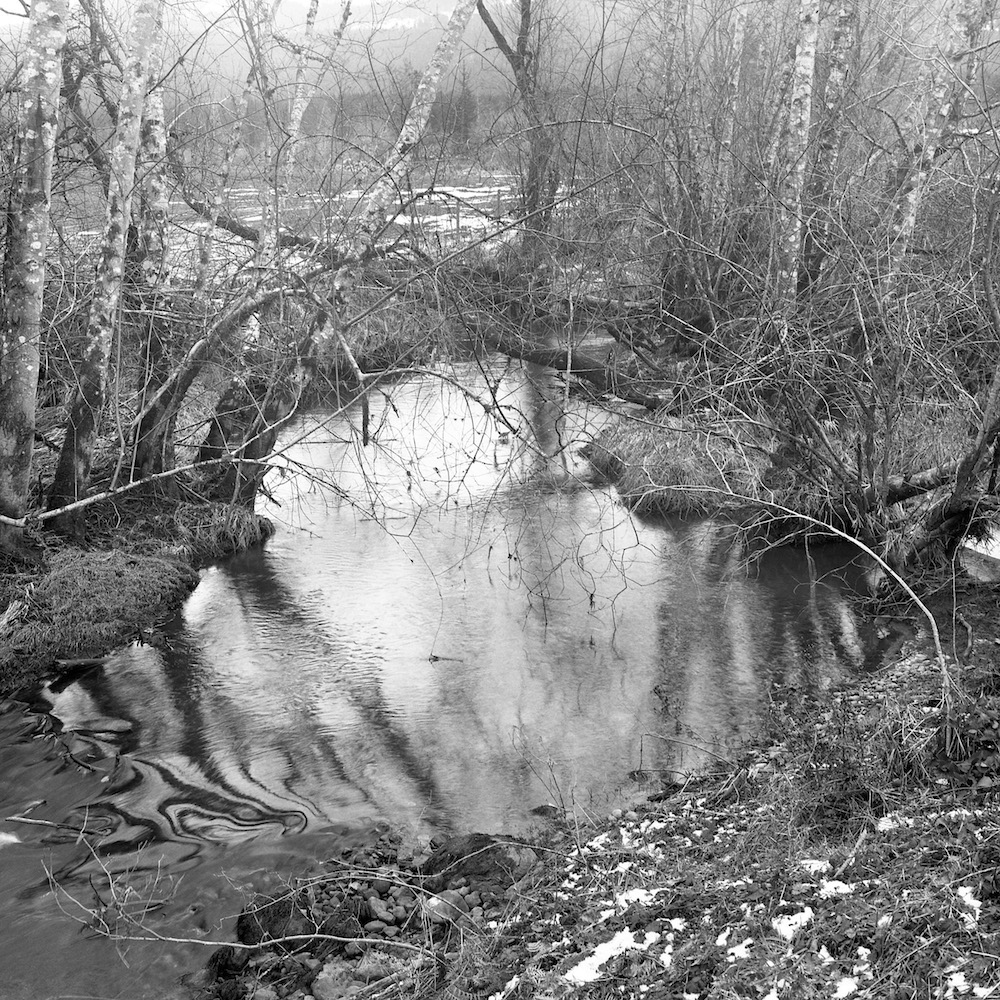
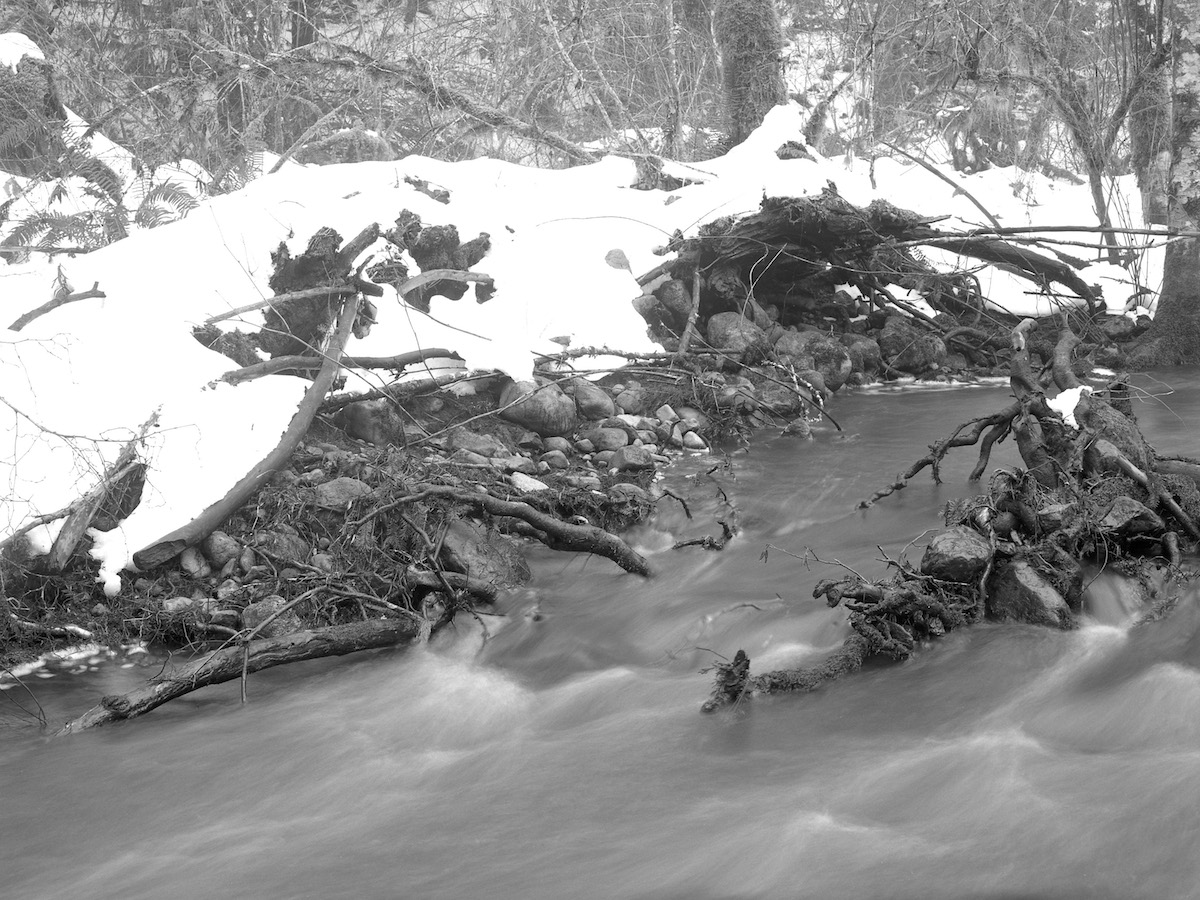
Not too surprisingly, there are lots of ravines and creeks. We live on the edge of Port Alberni backing onto Cherry Creek. Most of these photographs were taken close to our house. Roger Creek is about a 30 minute walk to the south. On the way I pass Canadian Tire, Walmart, and Tim Hortons. Kitsuksis Creek is about the same distance to the west. There are dozens of trails and old logging roads. They seem to be fairly well used but even on Saturday and Sunday mornings I generally don’t see anyone else. I can set up my tripod and camera and fiddle with compositions without distraction. For an outdoor photographer, the Alberni Valley is Shangri-La.
Some people don’t like the winters here. It can rain for days and stay overcast for weeks. You often hear of people who relocated from the prairies moving back because they miss the sunshine. We found our first winter here a bit depressing too. However, most people learn to live with it and seem to prefer rain over freezing to death. There are few days I can’t walk outside. The rain is almost always light to medium, rarely intense, so our umbrellas get lots of use. While it does snow sometimes, the temperature isn’t likely to fall much below zero. Recently, a couple of the twist clamps on my tripod legs froze up when I was photographing large icicles on a shale cliff but that was a first. This made the legs the right length to use the tripod as a walking stick to steady myself as I waded through some shallow water. The rocks in the creek bed can roll when you step on them. I learned this trick five or six years ago when I slipped on a wet log and twisted my knee. I was glad to have my tripod. I used it as a cane to help me limp back to my car.
Although I like my digital camera, I still have a fondness for black and white film, especially medium format. I know I could get virtually the same results with my digital camera. I could crop the image square and convert to monochrome in less than a minute. Yet I keep getting drawn back to older cameras. I like the look of them. I am fascinated by the engineering and design. I like using them. I know it is a time consuming nuisance to develop the film and it is also a time consuming nuisance scanning the negatives then fixing the little white spots caused by the dust and lint I wasn’t able to remove. But I still have a fondness for black and white film. Clearly I am not the only one. In Victoria there are three camera shops that sell black and white film, paper and chemicals. Victoria may be a Mecca for film camera aficionados.
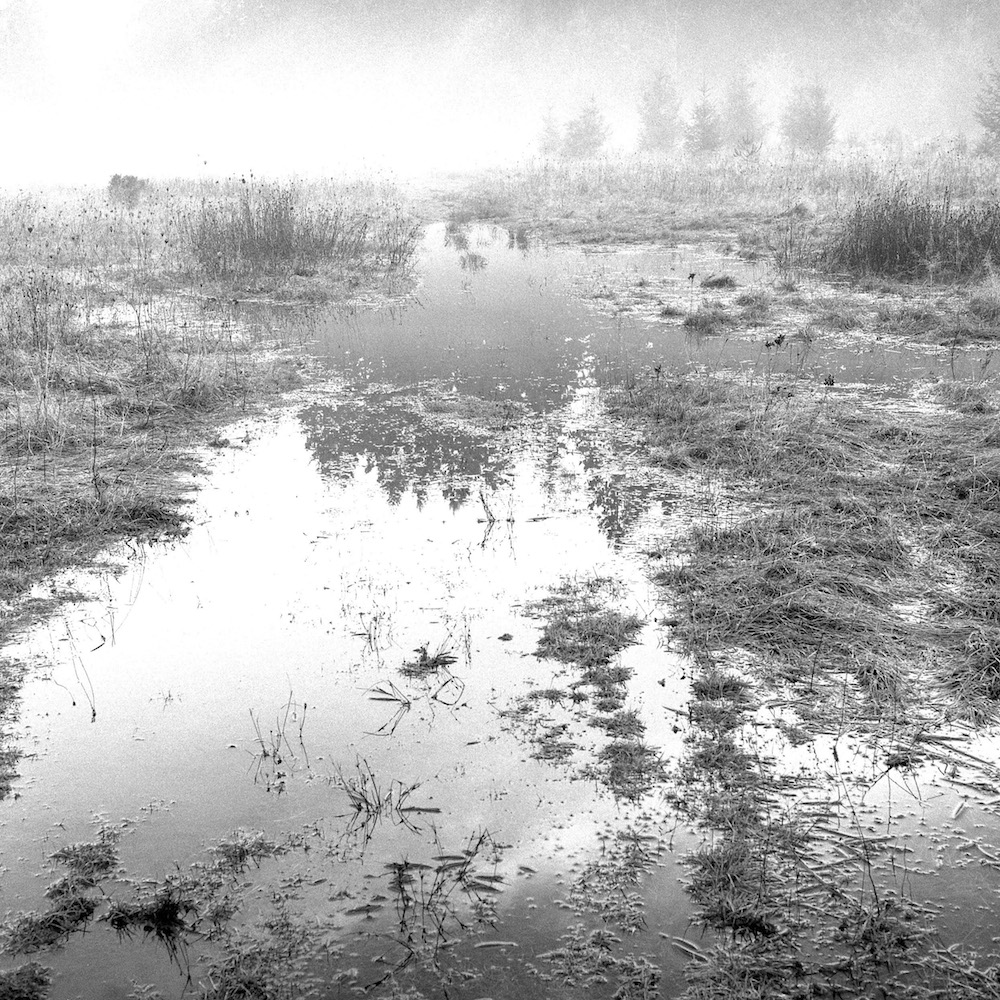
There are many days in the winter when it does not rain but there is fog or mist that gives you a wonderful diffused light. Even in the summer you can find deep shade in the ravines. I have come to learn the hard way that cold, damp days are unkind to old cameras. The slower shutter speeds on my Rolleicord started to slow down, so I had to get it repaired. I later got a Baby Linhof field camera with a roll film back. Its official name is Super Technika IV, 2 1/4” x 3 1/4”. Several times I noticed at the bottom of ravines that water was condensing on the outside of the camera. There must have been an incredible amount of water suspended in the air around me. Even though I would open up the Linhof when I got home to dry it out, the slower shutter speeds started to seize up. I sent the lens to be repaired, but despite not having used it a lot, within a few months the shutter was hanging up again. While I was thinking about getting it repaired once more, I spotted a twin lens reflex Yashicamat 124 in near mint condition for a few dollars more than servicing a shutter. The Yashicamat is an excellent camera and I have learned to treat it with more respect. It is a lot easier to carry and use than the Linhof and the negative size isn’t much smaller.
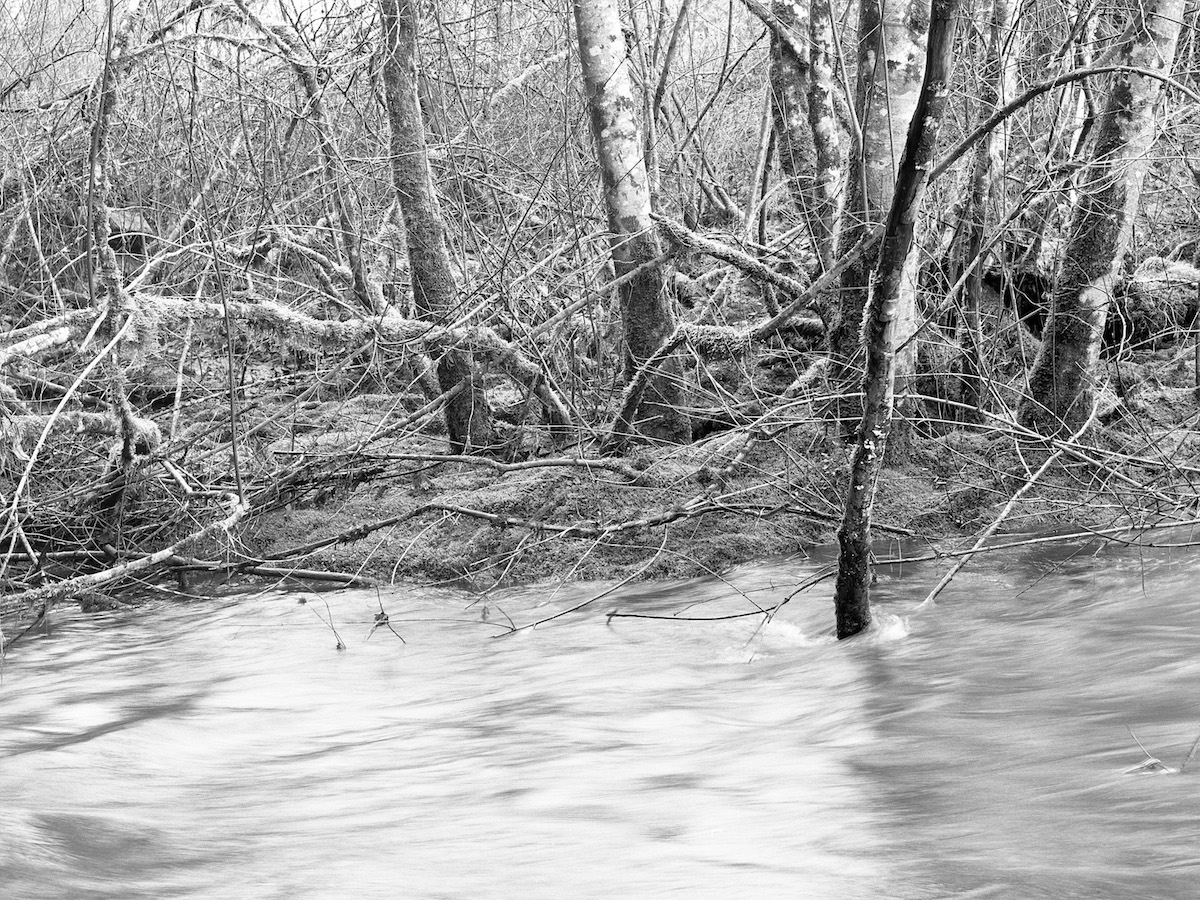
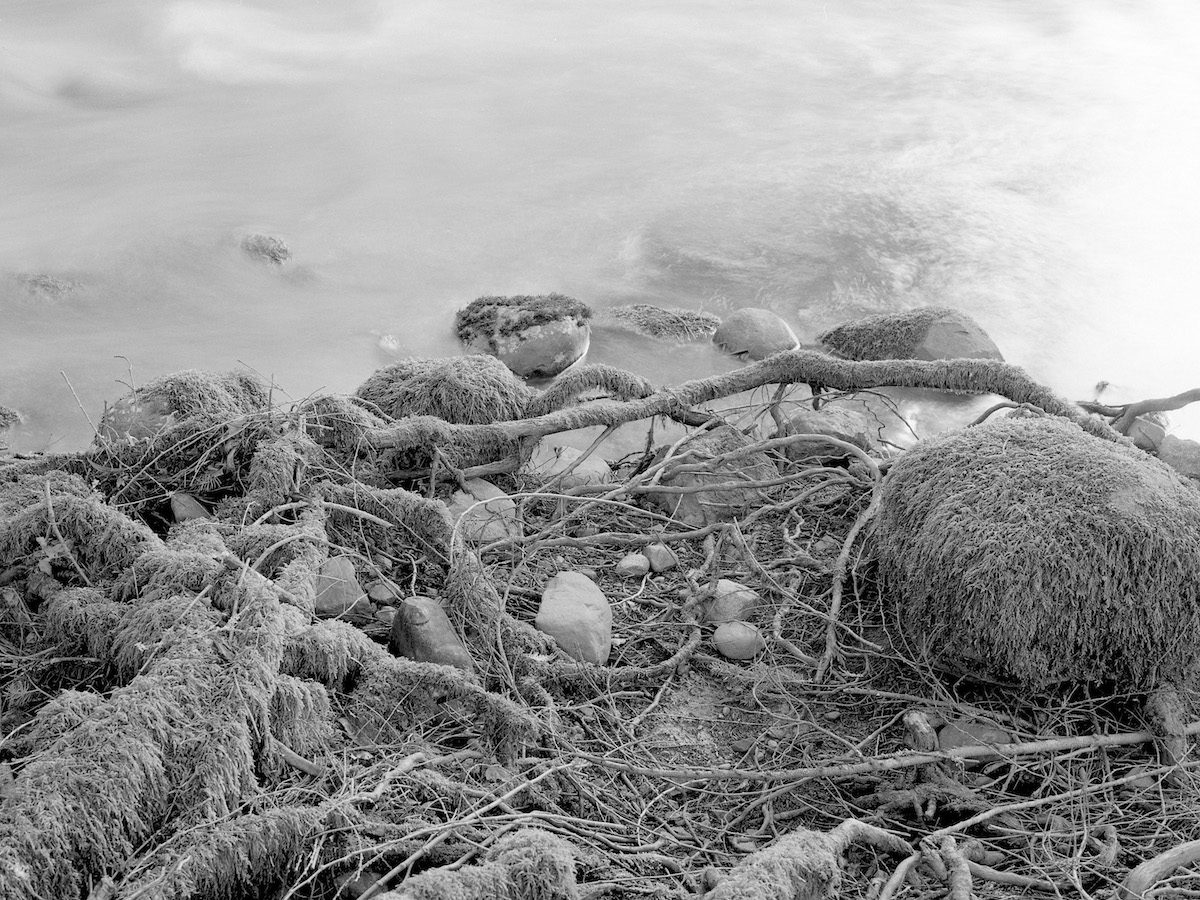
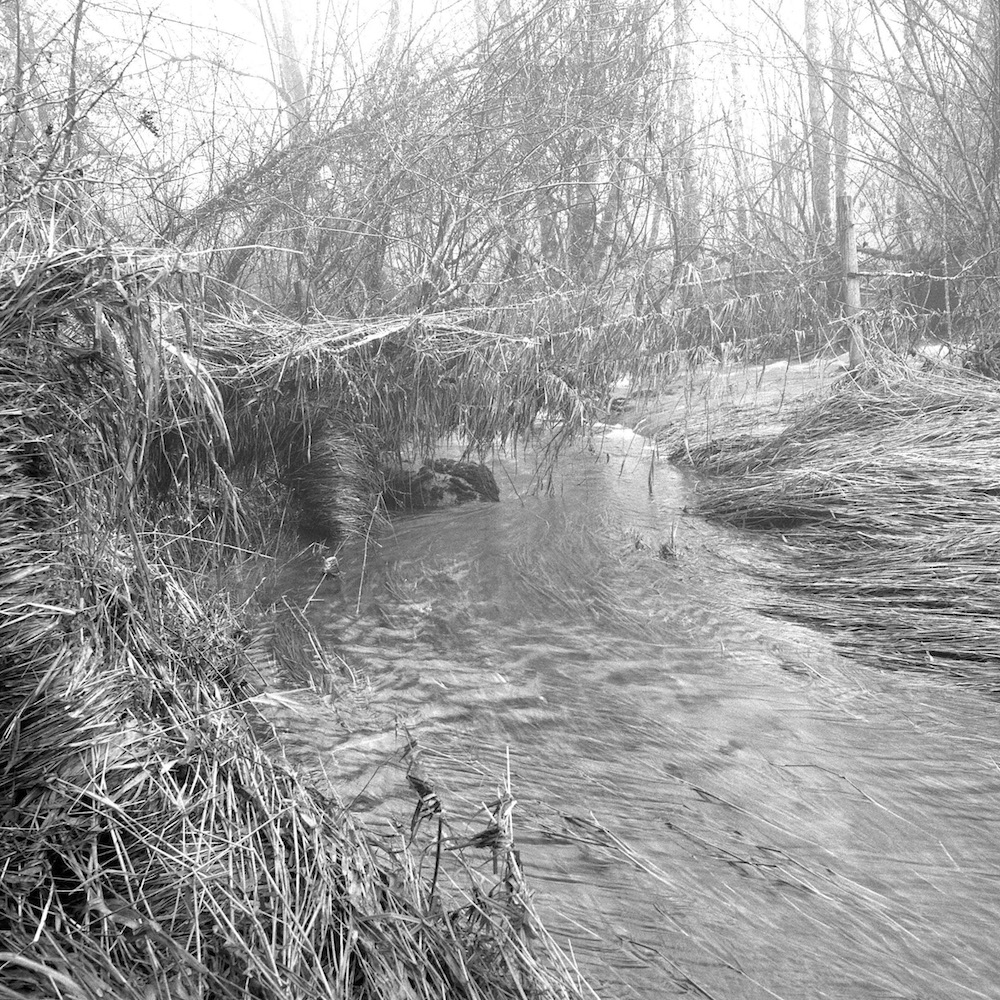
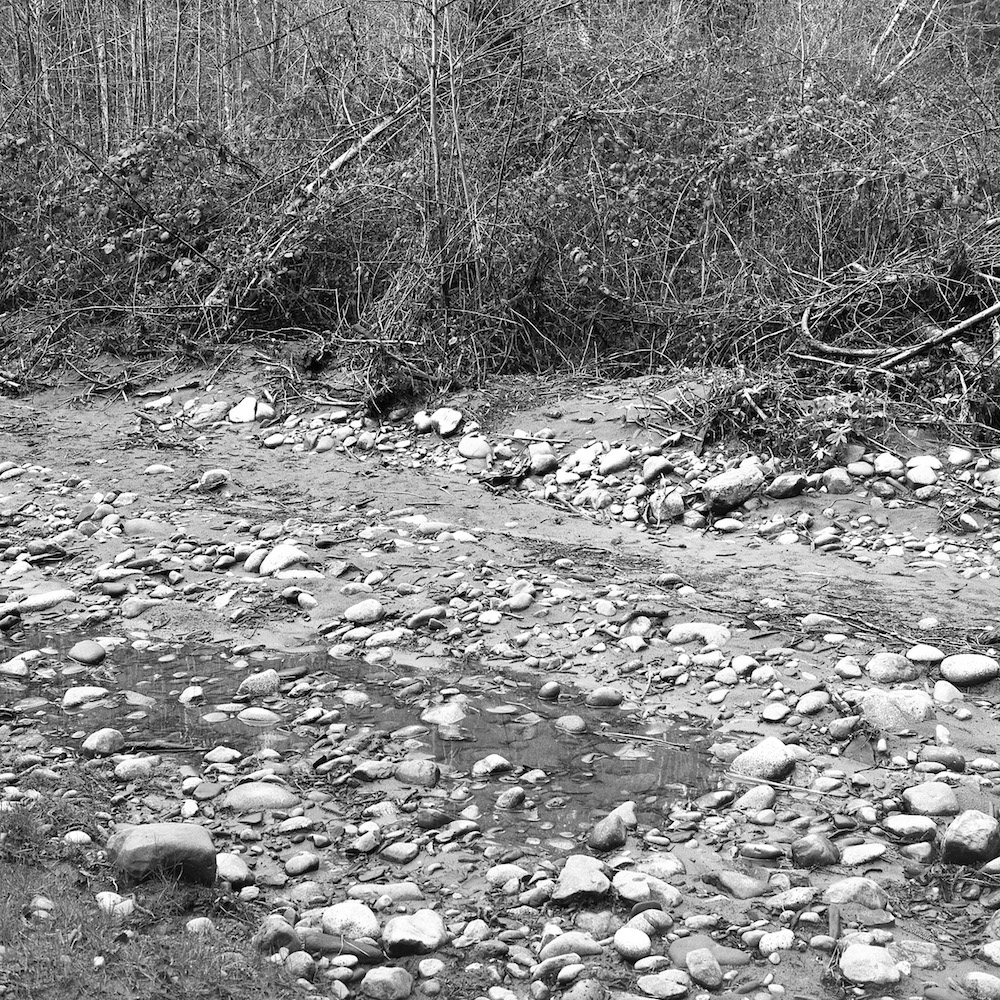
The landscape changes constantly in the Alberni Valley. There are the seasonal changes that you would expect, like leaves coming and going or the sun getting higher and lower. Water levels change greatly. At the end of summer the water is ofter so low in the creeks that there are many places where you can walk across. Six months later the creeks are swollen and roaring. Low lying fields are lakes. The power of the water is formidable. Last year I saw about a dozen trees piled up in Roger Creek. This year they were all gone. On Cherry Creek there used to be a green foot bridge. It disappeared after heavy rains a few years ago. There are still a few pieces of green two by four from the footbridge on the bank below our house. They may or may not be there when spring comes.
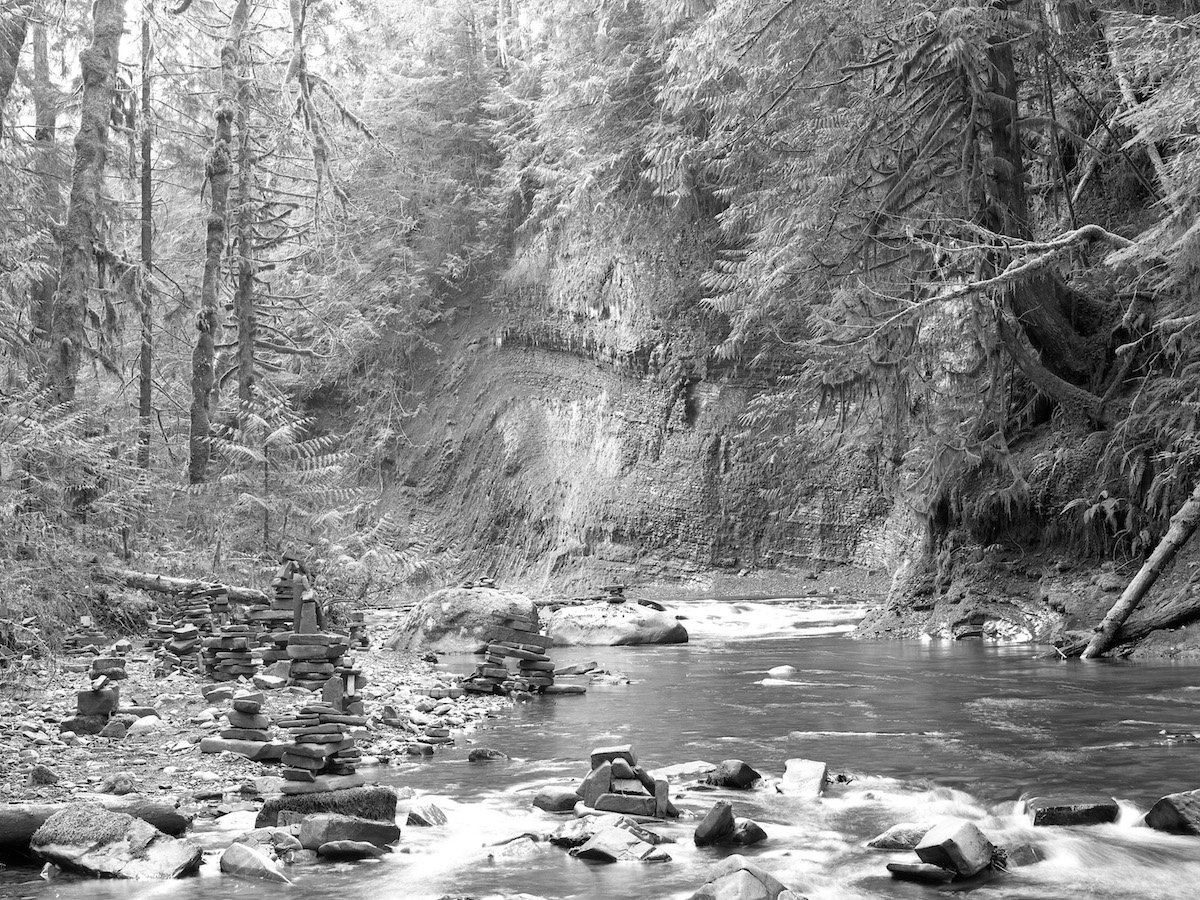
Near a local landmark known as Hole-in-the-Wall there are pieces of flat rock on the creek bed. Hikers construct dozens of Inuit style rock sculptures. By February they are all gone. The tons of water surging through the ravines erode the banks. Every year a few more trees fall over. Recently I went to photograph the remains of an old car partly underwater. I couldn’t because it was hidden under an alder or maple that had fallen on top of it.
.
.
.
.
.
.
.
.
.
.
.
.
.
.
.